How to Host a Charity Poker Tournament

Charity poker nights are some of the most fun games of the year. Events like the Charity Series of Poker, founded by poker pro Matt Stout, raise serious money with a relaxed, social atmosphere: less grinding, more laughing. You can run the same kind of night at home for a cause you care about.
How the Money Works
The simplest structure: every player makes a fixed donation to enter, say $50 or $100. A share of it goes to the charity and the rest funds a prize.
- Half and half is the most common split: half to the cause, half to the prize pool.
- All to charity works too, with a donated prize for the winner instead: a bottle of something nice, a deck of good cards, or a trophy.
- Rebuys and add-ons raise much more. Let busted players buy back in once during the first hour, with the whole rebuy going to the charity.
- Toy drives are popular around the holidays: the entry fee is an unwrapped toy instead of cash.
Collect every donation before the first hand, and write down who paid what.
Check the Rules Where You Live
Gambling law varies by state and country. In many places a game where the house takes a cut, or where the prize comes out of the entry fees, is regulated even for a good cause, and some places require a permit for charity gaming. Before you advertise a cash prize, check your local rules or talk to the charity. Donated, non-cash prizes and entry fees that go entirely to the cause are usually the safest structure.
A Tournament Structure That Fits One Evening
Charity events are usually turbo tournaments: faster blinds so the whole night fits in two or three hours and people can enjoy the rest of the party.
- Starting stack: 50 to 100 big blinds is plenty.
- Blind levels: 15 minutes each for a short night, 20 for a longer one.
- Rebuys: allowed for the first two or three levels only.
- Payouts: pay the top two or three players, or award one prize to the winner.
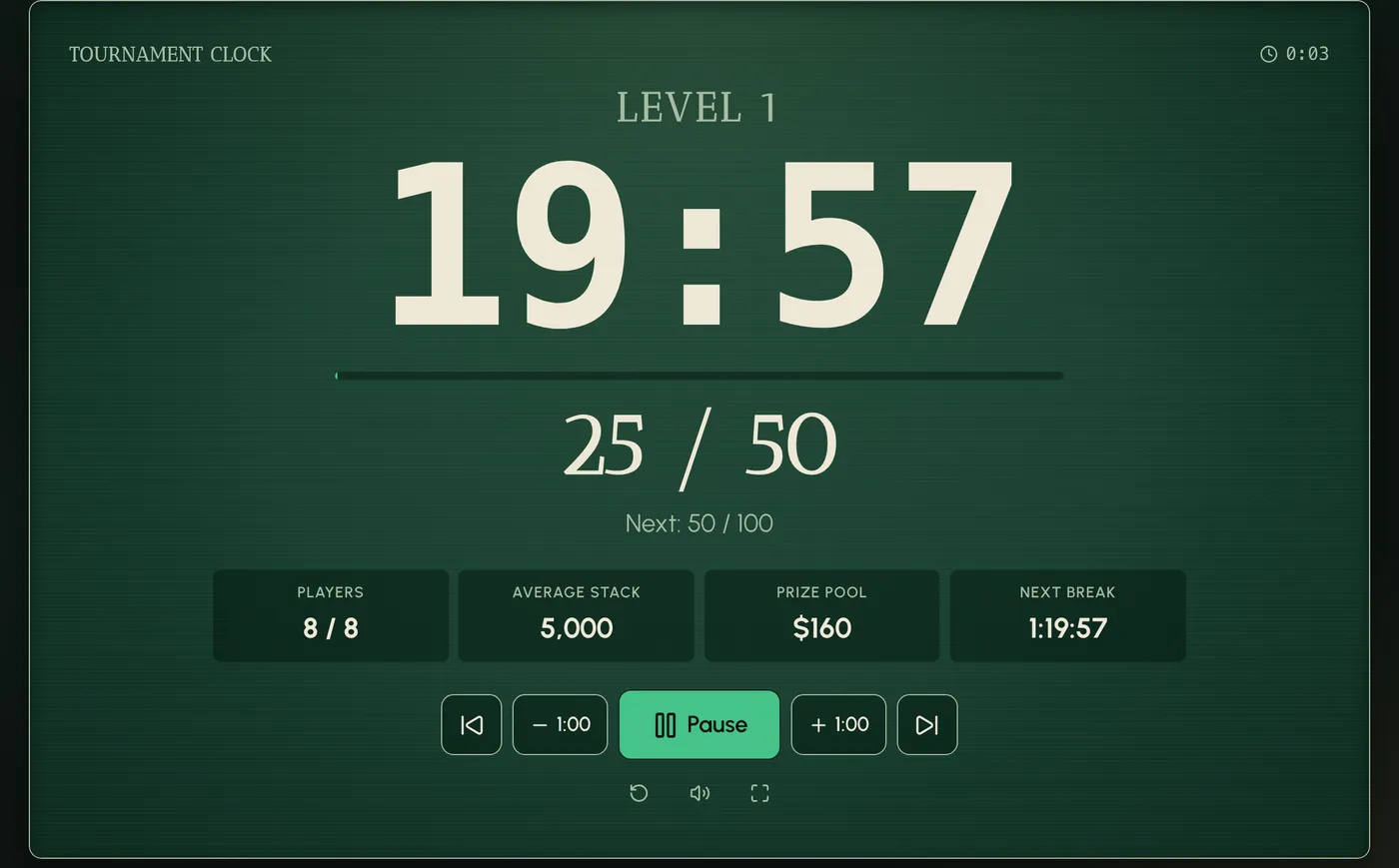
The home tournament guide has full blind schedules, the chip calculator works out starting stacks from the chips you own, and the free tournament clock runs the levels on any laptop or TV.
Keeping a Mixed Crowd Happy
A charity night brings together regular players and people who play once a year. A few things keep it fun for both:
- Print a hand-rankings sheet for each table, or send everyone the hand rankings link beforehand.
- Have one experienced player at each table to settle rulings and keep the game moving.
- Don't make beginners deal. Exposed cards and misdeals slow the table and embarrass people.
- Plan a short break at the end of the rebuy period, and announce how much has been raised so far.
New players can learn the basics in a few minutes from how to play Texas Hold'em and the poker hand rankings.
Let RbPkr Deal
RbPkr takes care of the part that slows a mixed table down. Set a tablet or TV in the middle showing the board, have everyone scan the table's QR code, and their hole cards appear on their phones. It shuffles, moves the button and reads every hand at showdown, so the host can spend the evening raising money instead of running a card room. Guests can join without an account.
Play a Hand Right Now
Deal three free hands of Texas Hold'em against a bot, right in your browser.
Hosting a game for friends? Sign up free and deal the first hand in a minute.